Watch the Market, Not the User / design diagrams
Decision flows, supporting boards and model evidence. All shapes, labels and connected arrows are editable in the native Excalidraw files. Open a downloaded file in Excalidraw to revise it. SVG and PNG exports are ready to share.
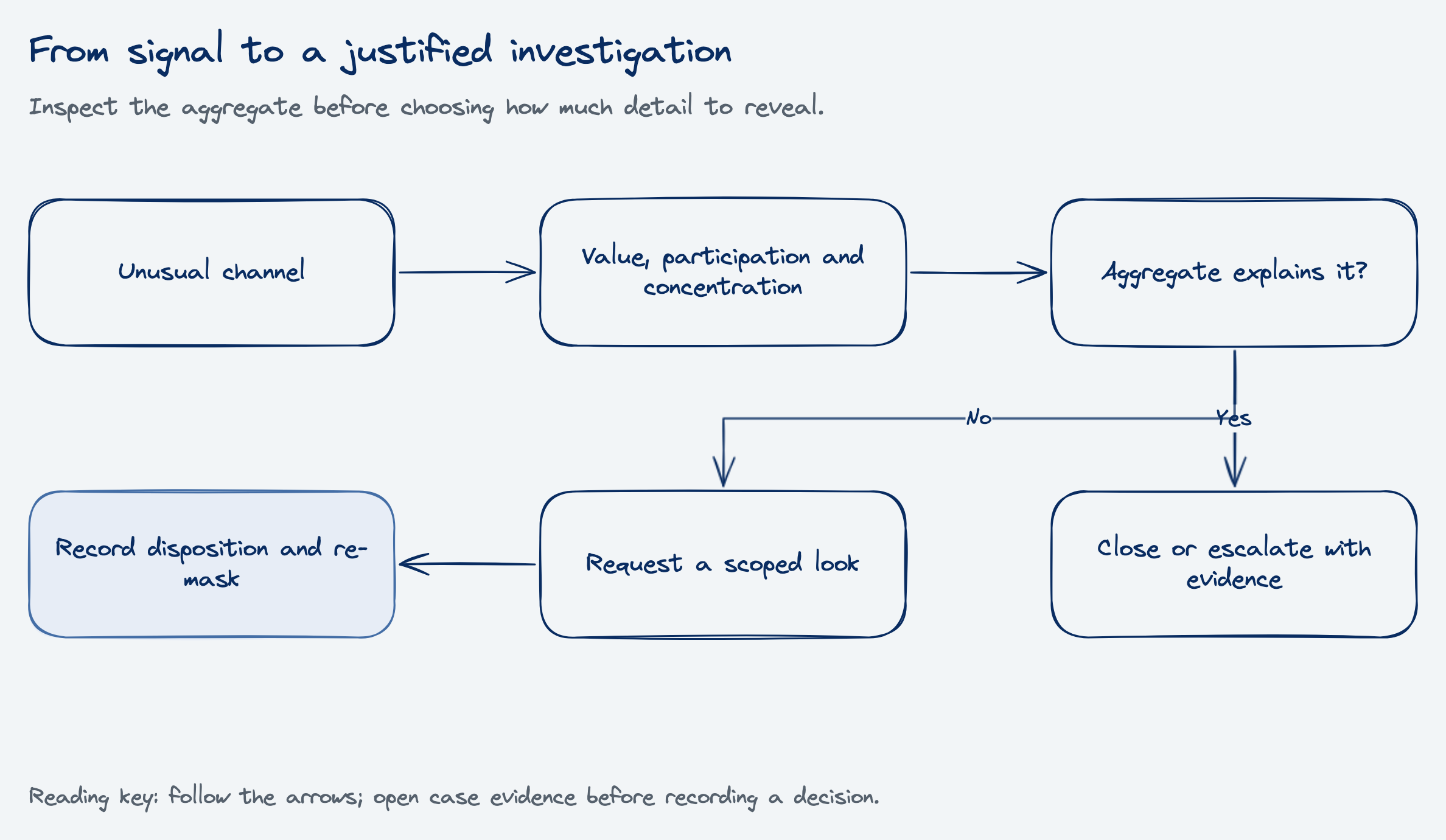
From signal to a justified investigation
Inspect the aggregate before choosing how much detail to reveal.
Read the diagram as text
- Notice an unusual channel
- Compare value and participation
- Explain the aggregate or inspect a pseudonym
- Request only the identity scope needed
- Record the disposition and re-mask
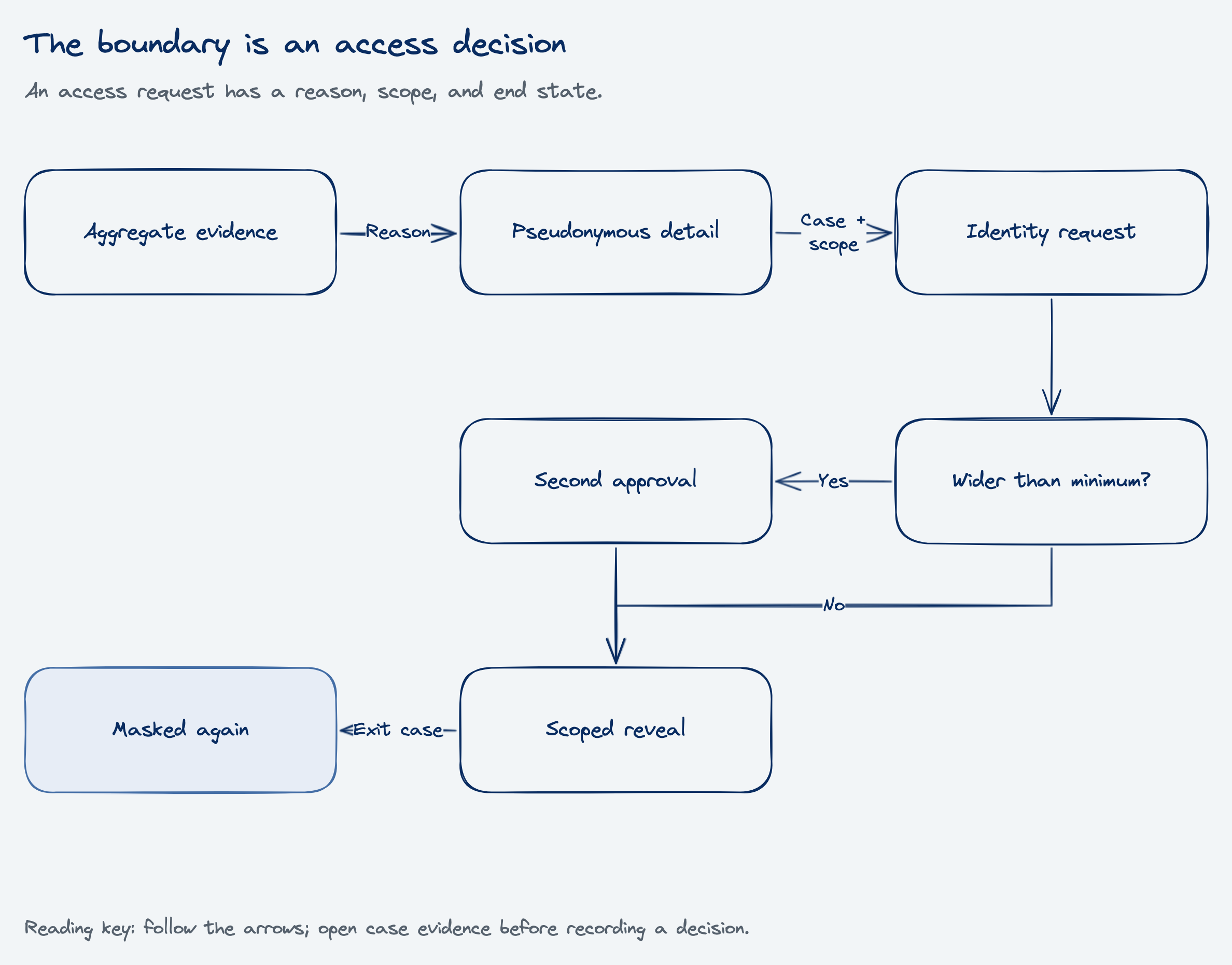
The boundary is an access decision
An access request has a reason, scope, and end state.
Read the diagram as text
- Aggregate evidence needs no individual reveal
- A reason unlocks pseudonymous inspection
- Identity needs a case and bounded scope
- Wider scope requires a second approval
- Leaving the investigation returns to masking
Reveal only the evidence the decision needs
Access boundaries and exit behavior
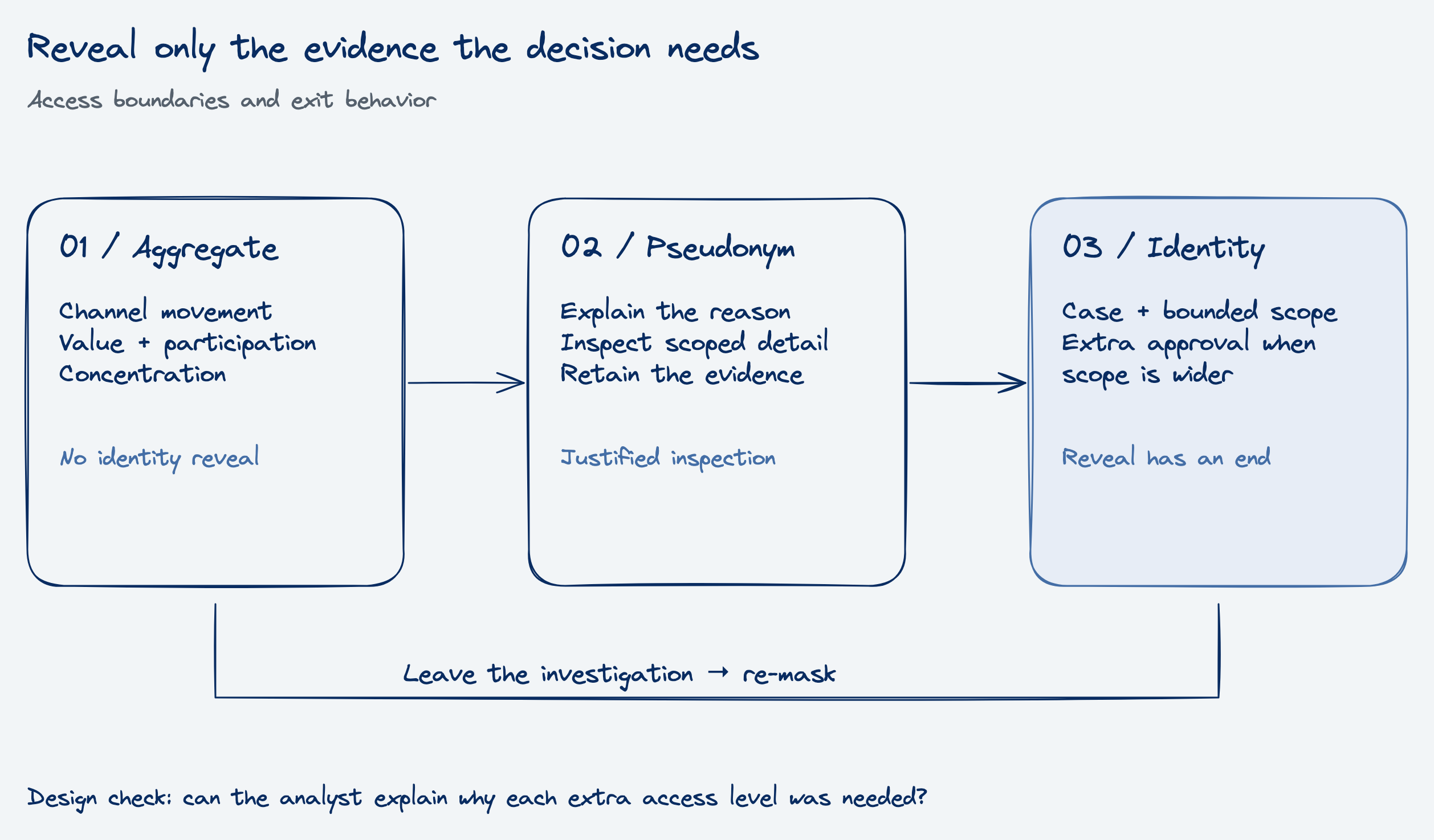
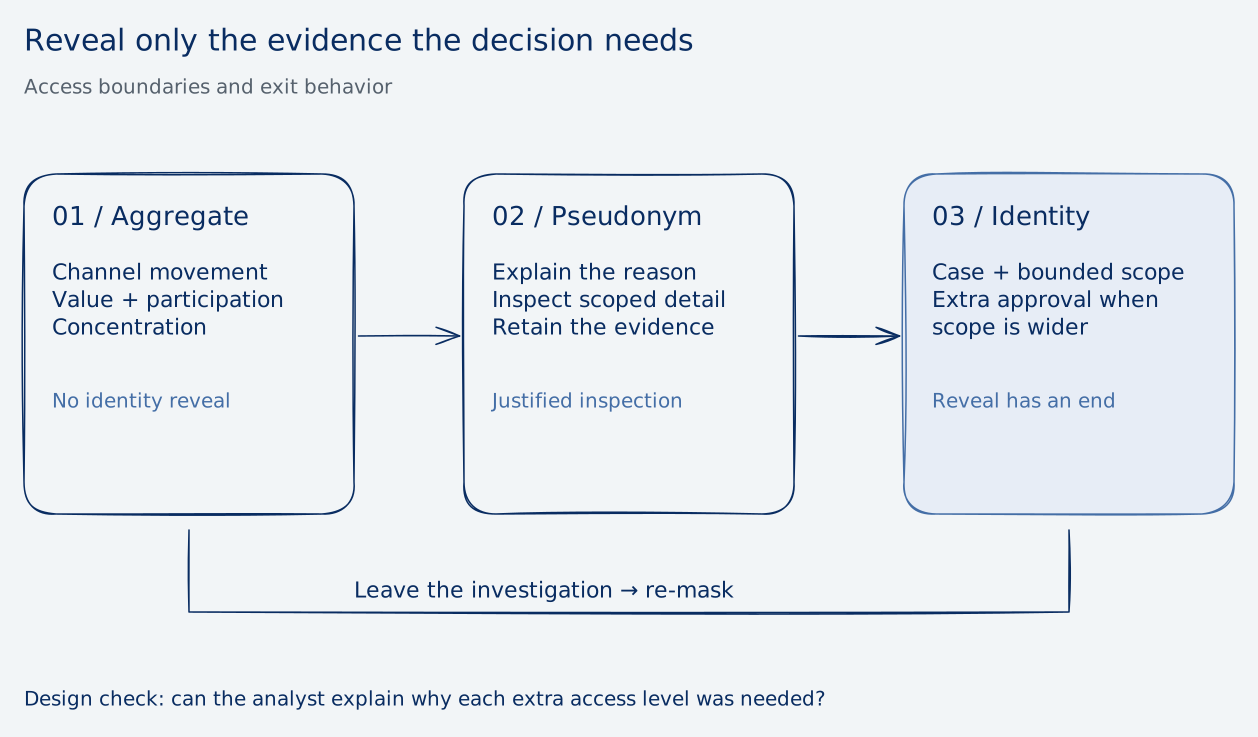
Read the diagram as text
- 01 / Aggregate
- 02 / Pseudonym
- 03 / Identity
- Channel movement
Value + participation
Concentration - Explain the reason
Inspect scoped detail
Retain the evidence - Case + bounded scope
Extra approval when
scope is wider - No identity reveal
- Justified inspection
- Reveal has an end
- Leave the investigation → re-mask
- Design check: can the analyst explain why each extra access level was needed?
Access ladder / reason, scope and expiry
The access policy and the audit events that make it inspectable
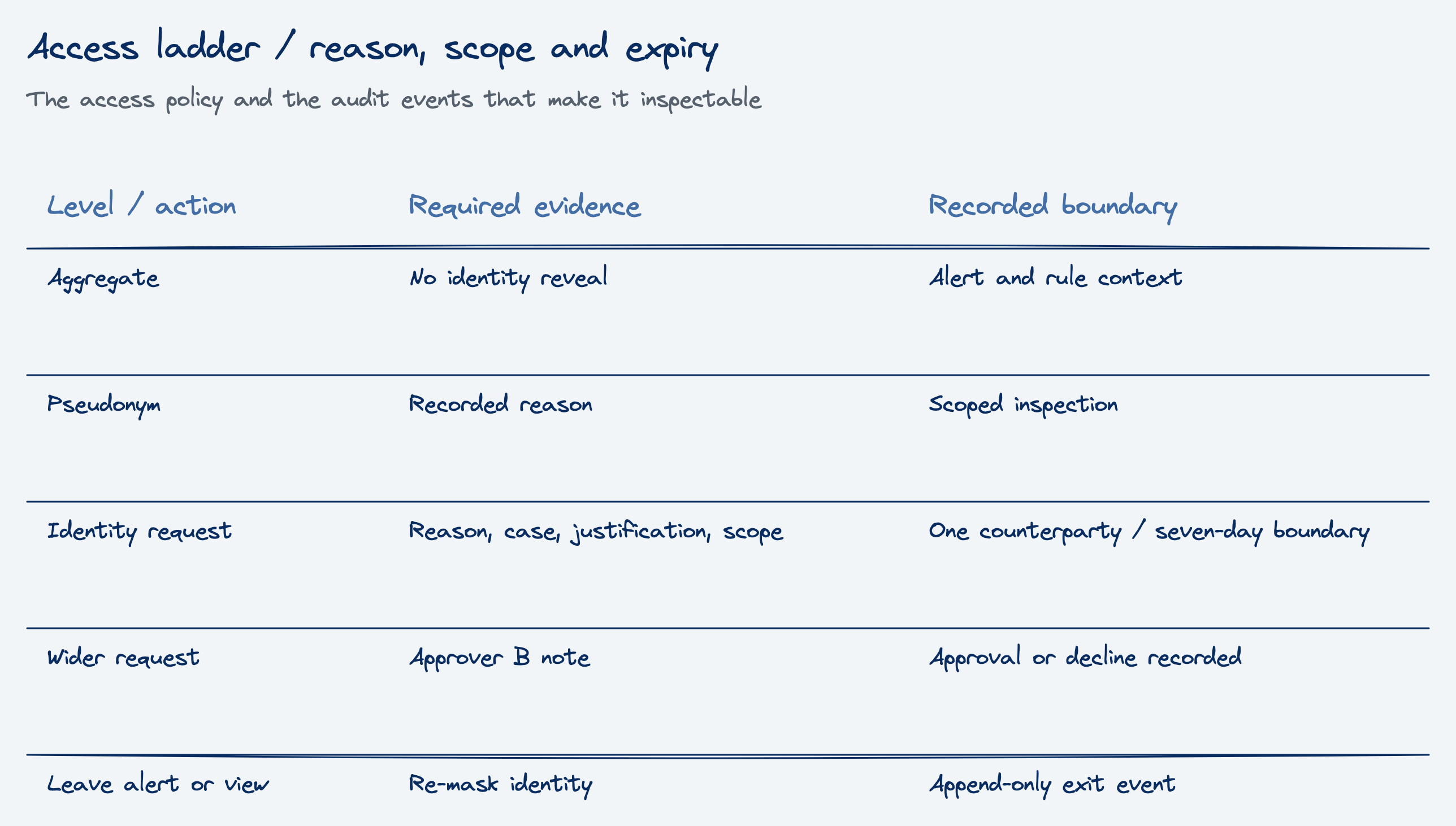
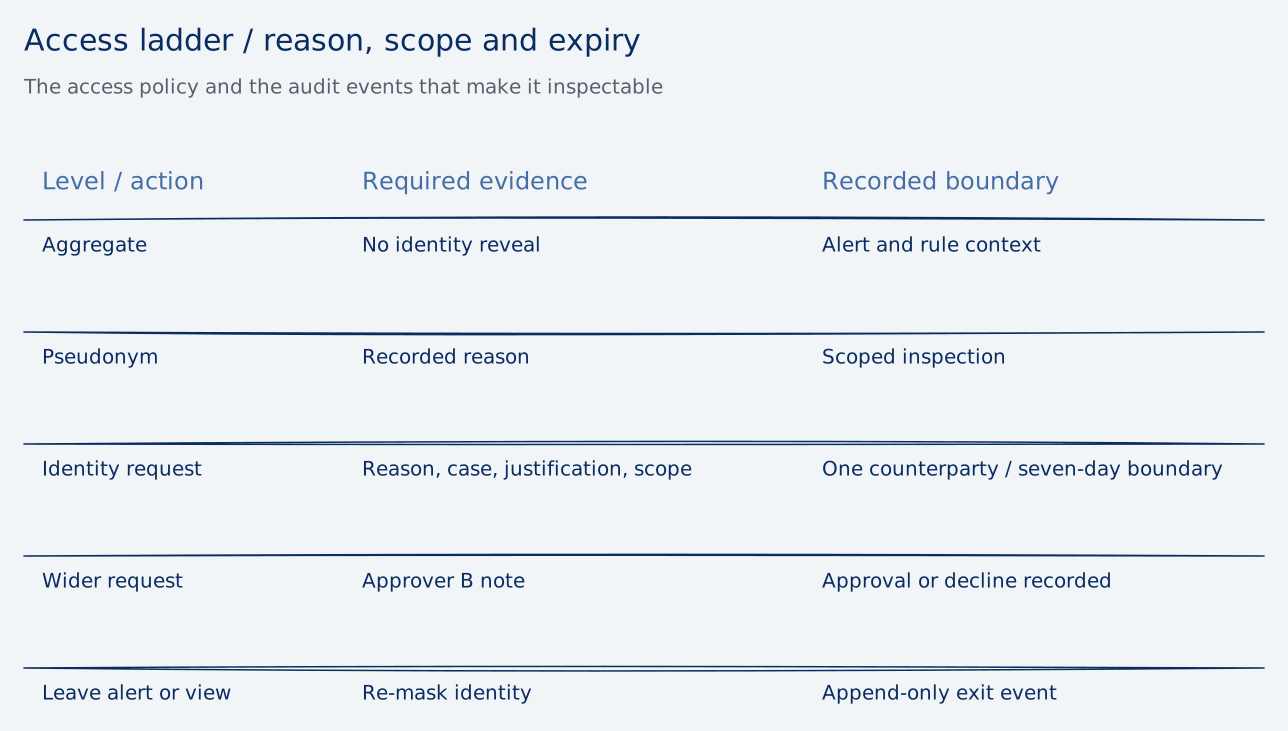
Read the diagram as text
- Level / action
- Required evidence
- Recorded boundary
- Aggregate
- No identity reveal
- Alert and rule context
- Pseudonym
- Recorded reason
- Scoped inspection
- Identity request
- Reason, case, justification, scope
- One counterparty / seven-day boundary
- Wider request
- Approver B note
- Approval or decline recorded
- Leave alert or view
- Re-mask identity
- Append-only exit event
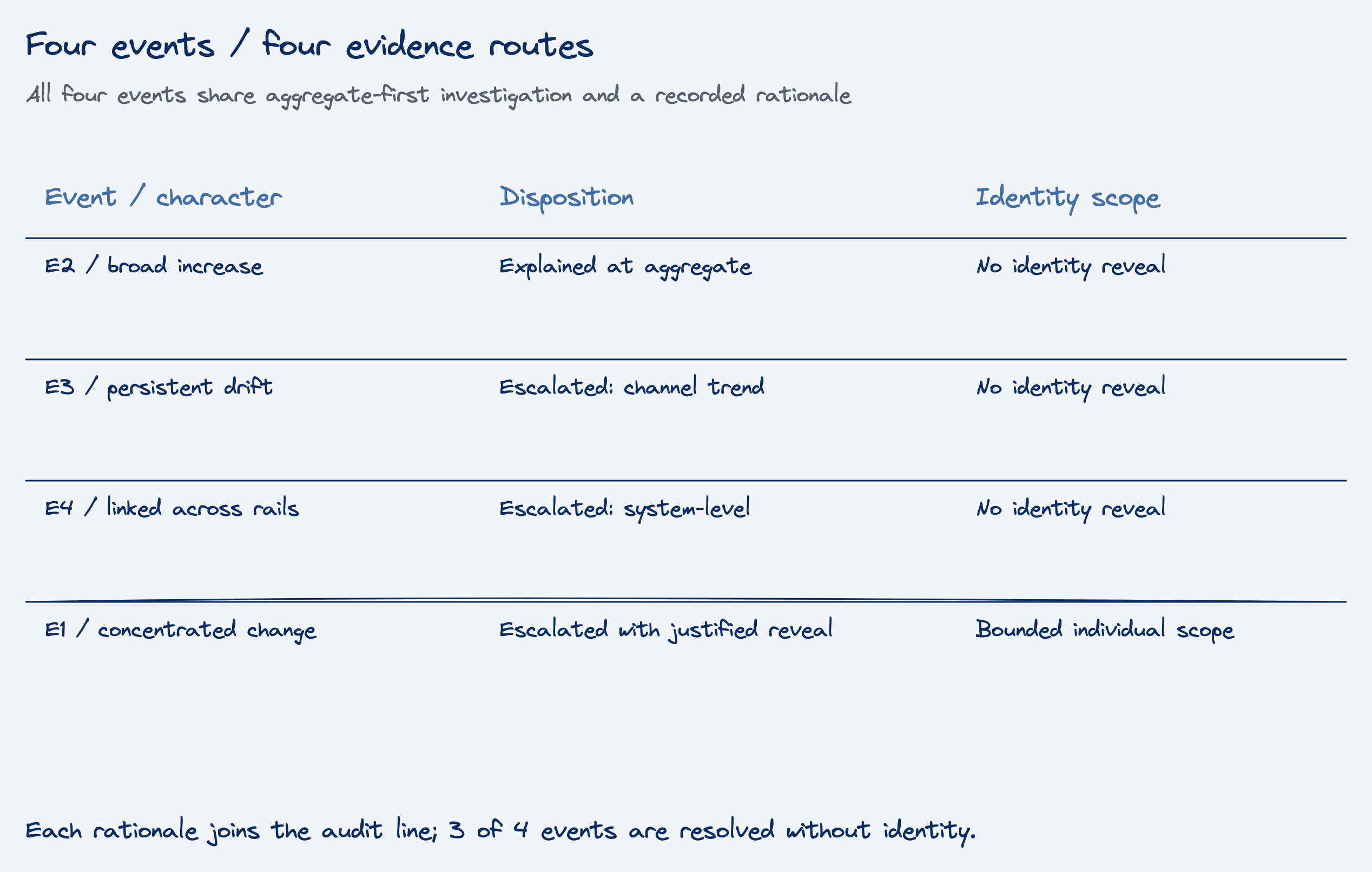
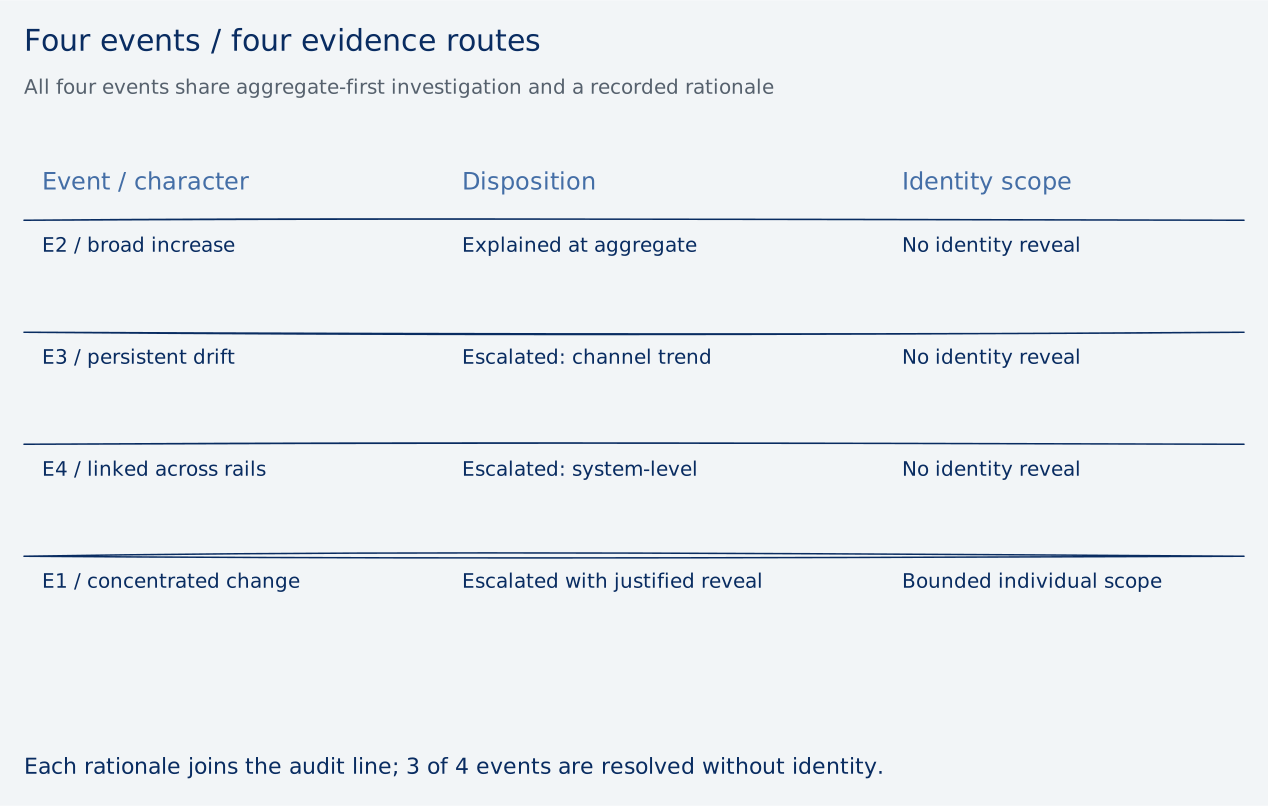
Four events / four evidence routes
All four events share aggregate-first investigation and a recorded rationale
Read the diagram as text
- Event / character
- Disposition
- Identity scope
- E2 / broad increase
- Explained at aggregate
- No identity reveal
- E3 / persistent drift
- Escalated: channel trend
- No identity reveal
- E4 / linked across rails
- Escalated: system-level
- No identity reveal
- E1 / concentrated change
- Escalated with justified reveal
- Bounded individual scope
- Each rationale joins the audit line; 3 of 4 events are resolved without identity.
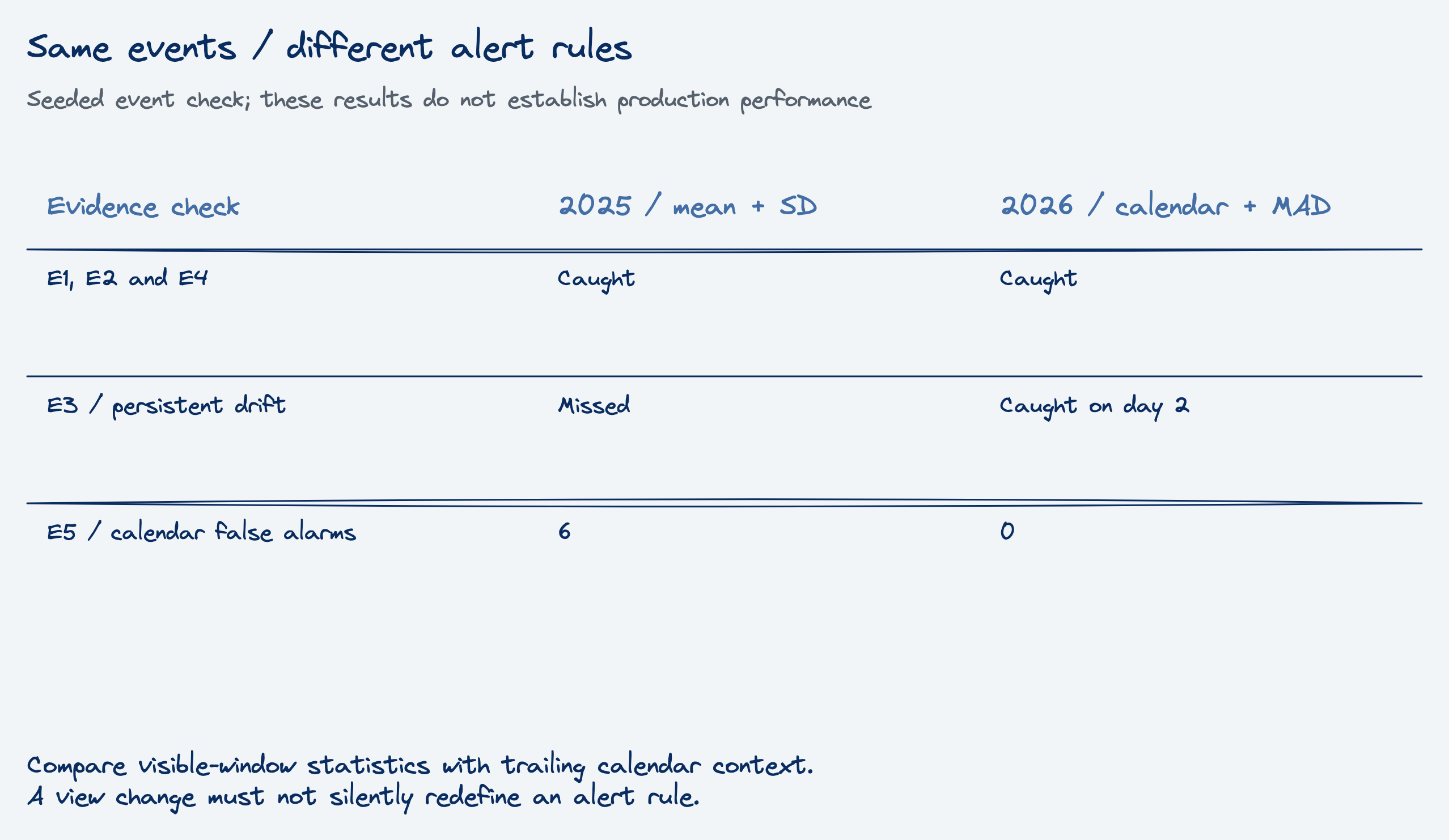
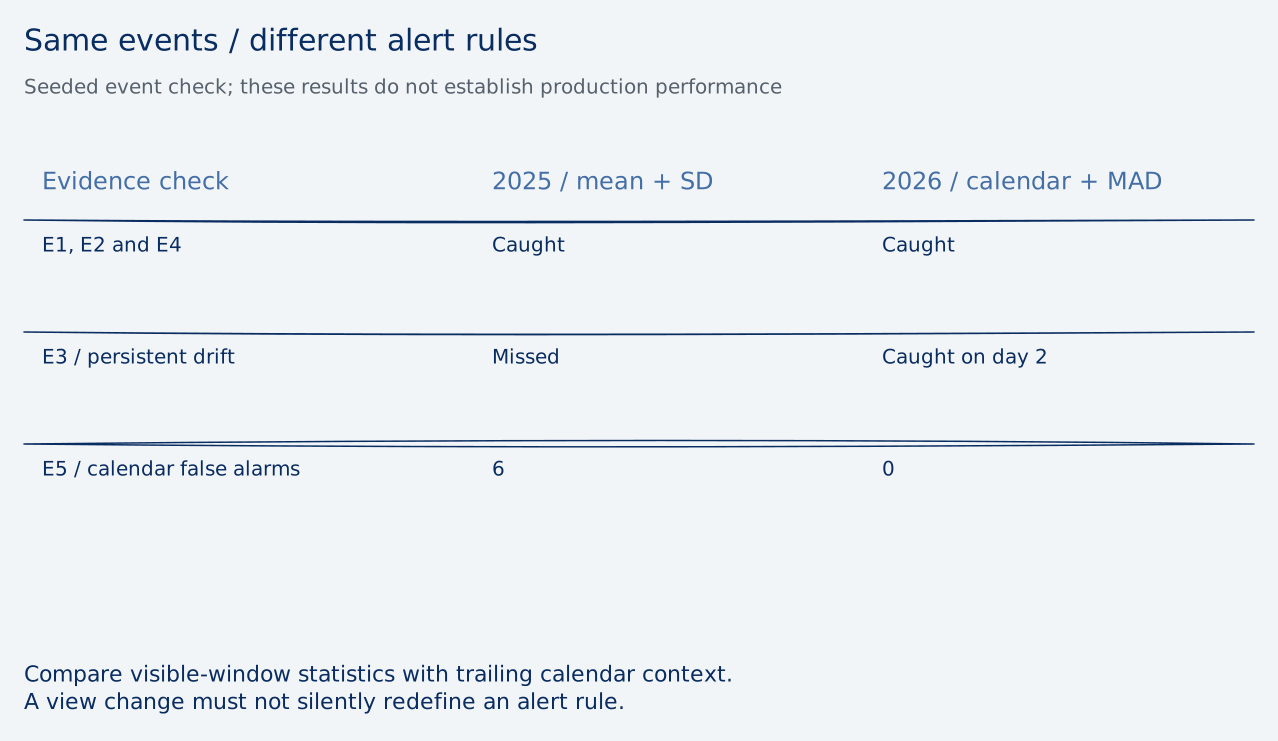
Same events / different alert rules
Seeded event check; these results do not establish production performance
Read the diagram as text
- Evidence check
- 2025 / mean + SD
- 2026 / calendar + MAD
- E1, E2 and E4
- Caught
- Caught
- E3 / persistent drift
- Missed
- Caught on day 2
- E5 / calendar false alarms
- 6
- 0
- Compare visible-window statistics with trailing calendar context.
A view change must not silently redefine an alert rule.